A deodorant limits or hides the smell of sweat. An antiperspirant reduces the sweat itself, usually with aluminium salts. Most "natural" deodorants contain no aluminium, so they will not keep you dry; they only help with odour. If you are thinking of switching because you are worried about cancer, it helps to know that the major cancer organisations do not find a link. If you switch for other reasons, watch out for baking soda and fragrance, which can bother the skin.
What is the difference between a deodorant and an antiperspirant?
Sweat does not smell on its own. According to DermNet, odour forms when the bacteria that normally live on the skin break down sweat, sebum and keratin. The underarms also have apocrine glands, which after puberty produce a thicker sweat, and this is the main source of strong body odour.
- Deodorant: does not stop sweat. It masks odour or stops bacteria from producing it.
- Antiperspirant: aluminium salts (such as aluminium chlorohydrate) temporarily block the sweat ducts, so less sweat reaches the skin. Many antiperspirants also act as deodorants.
On the label, look in the ingredients list for words starting with "aluminium" or "alum". Deodorant crystals, for example, are usually alum (potassium alum), which is also an aluminium salt, even when sold as "natural".
Are aluminium salts safe?
The EU Scientific Committee on Consumer Safety (SCCS) reviewed the question with new data from a human study and concluded in 2020 that aluminium compounds are safe at aluminium concentrations up to 6.25% in non-spray deodorants and antiperspirants and up to 10.60% in sprays. The committee also noted that daily use of cosmetics does not add significantly to the aluminium the body takes in from other sources, mainly food.
On breast cancer:
- Cancer Research UK states that deodorants and antiperspirants do not increase cancer risk and that the best studies show no link with aluminium.
- The American Cancer Society cites a study in which only 0.012% of the aluminium in an antiperspirant was absorbed through the skin. It also notes that no major organisation (IARC, NTP, FDA) has found conclusive evidence of a link to cancer.
So if an antiperspirant suits you, there is no need to give it up for this reason. If your dermatologist has told you to avoid aluminium, as DermNet advises for hidradenitis suppurativa, follow their advice.
What can a "natural" deodorant do, and what can't it?
It can limit odour: with ingredients that block bacteria or their enzymes (such as triethyl citrate), with zinc salts, with starches that absorb moisture on the surface, or simply with fragrance.
It cannot keep you dry the way an antiperspirant does. Without aluminium salts, you will sweat as normal.
And "natural" does not mean "allergy-free". The medical literature includes cases of allergic contact dermatitis from natural deodorants: four people allergic to a lichen extract (J Am Acad Dermatol, 2006) and one allergic to zinc ricinoleate (Contact Dermatitis, 2024). Essential oils and fragrance can also cause allergy.
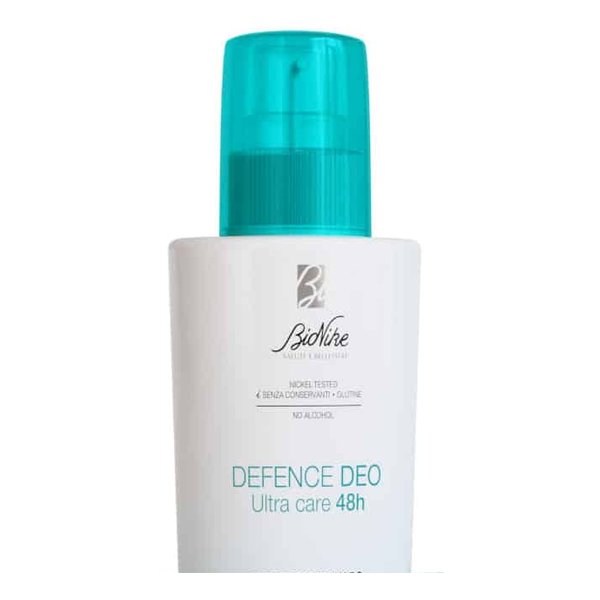
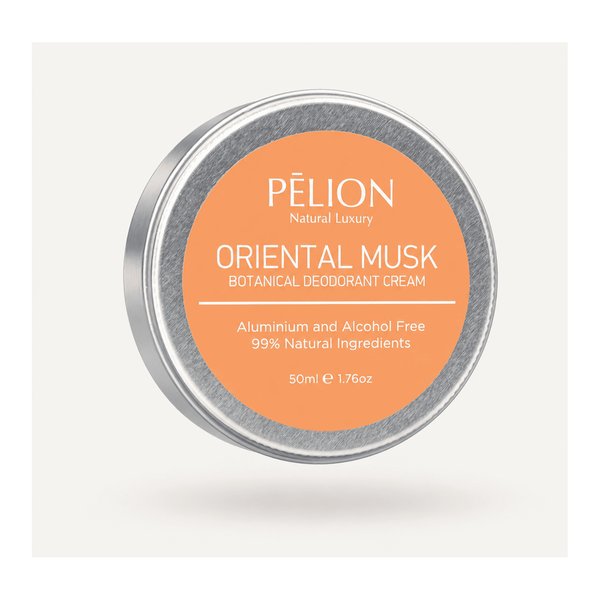
BioNike's Ultra Care spray contains no aluminium salts, fragrance or alcohol, and tackles odour with triethyl citrate. It is one option for people with sensitive skin. PELION's Oriental Musk is a balm applied with the fingers: it contains baking soda, rice and corn starch, shea butter, and a musk fragrance together with lavender and tea tree oils. As the shop itself says, it helps with odour and surface moisture, not with sweating.
Why does baking soda bother some people?
Baking soda (sodium bicarbonate) is alkaline: a solution of it has a pH of about 8.3. The skin surface is acidic, with an average pH below 5 according to a study of 330 people. In the armpit, where the skin is thin and rubs, that difference may bother some people. If you get redness, burning or itching after switching:
- stop the product and let the skin settle,
- try a formula without sodium bicarbonate and without fragrance,
- do not apply it straight after shaving, and always put it on clean, dry skin.
Is there a "detox period" when you switch?
You will often read that your armpits need weeks to "detox". We found no research to support this. The American Cancer Society explains that sweat glands exist mainly to cool the body, not to remove toxins, which are cleared mostly by the liver and kidneys.
What changes in practice is simple: if you stop an antiperspirant, you will sweat as much as you did before you used it. Give yourself some time to find the product and routine that suit you, and in a hot Cyprus summer, keep a spare T-shirt to hand.
Quick check at the shelf
- Do you want less sweat, or only less odour? For sweat you need an antiperspirant.
- Is there "aluminium" or "alum" in the list?
- Does it contain sodium bicarbonate? If your skin is sensitive, prefer one without.
- Does it contain "parfum" or essential oils?
- Have you tried it on a small patch for a few days first?
When to see a doctor
According to the NHS, talk to your GP if you suddenly start sweating much more than usual, or if body odour does not improve with self-care. A pharmacist can suggest stronger antiperspirants, and there are treatments for excessive sweating. Also see a dermatologist if you get a rash, blisters or swelling in the armpit that does not settle when you stop the product.
FAQ
Can I use an antiperspirant and a deodorant together?
Yes. DermNet suggests applying antiperspirant at night to dry skin, because we sweat less during sleep, so it works better and irritates less. In the morning you can use a deodorant. You do not have to choose one or the other.
Are deodorant crystals "aluminium-free"?
Usually not. Most are alum (potassium alum or ammonium alum), which is an aluminium salt. Check the ingredients list.
Why am I asked not to wear deodorant on the day of a mammogram?
According to the American Cancer Society, many of these products contain aluminium, which can show up on a mammogram as tiny white specks and confuse the reading. It does not mean aluminium is dangerous, only that it can affect the image.
Sources: SCCS, Opinion on the safety of aluminium in cosmetic products (SCCS/1613/19, final version 3–4 March 2020), Cancer Research UK, Do cosmetics cause cancer?, American Cancer Society, Antiperspirants and Breast Cancer Risk, DermNet, Antiperspirant, DermNet, Bromhidrosis, NHS, Body odour, Sheu M et al., Allergic contact dermatitis from a natural deodorant, J Am Acad Dermatol 2006, Samaran Q et al., Allergic contact dermatitis to zinc ricinoleate in a "natural" deodorant, Contact Dermatitis 2024, Lambers H et al., Natural skin surface pH is on average below 5, Int J Cosmet Sci 2006, PubChem, Sodium bicarbonate (pH).