The back of a cosmetic tells you far more than the front. The ingredients list (INCI) runs in order of quantity, the word "parfum" means the product contains fragrance, and the open-jar symbol with a number (for example "12M") tells you how many months you have to use it up once opened. Words such as "natural" or "clean" are not a certification. The claims "hypoallergenic", "dermatologically tested" and "free from..." have specific rules in the EU, but none of them guarantees you will not react.
What must the pack show by law?
The EU Cosmetics Regulation (EC) 1223/2009 (Article 19) sets out what every product sold in the EU must carry, in indelible, easily legible lettering:
- Name and address of the responsible person, the company that answers for the product. For imported products, the country of origin too.
- Nominal content in ml or g.
- Date of minimum durability or period after opening (see below).
- Precautions for use, where needed.
- Batch number, so the product can be traced if something goes wrong.
- Function of the product, unless it is obvious.
- Ingredients list, headed by the word "ingredients".
How do I read the ingredients list (INCI)?
Ingredients use international INCI names, usually in English or Latin. Three rules from the Regulation help you read it:
1. The order shows the quantity. Ingredients are listed in descending order of weight at the time they are added. Anything below 1% can be listed in any order after the rest. In most creams the first ingredient is water (aqua). If a brand says its cream is based on milk instead of water, you should see the milk first. And if an "extract" that is pictured on the front only appears near the end, there is probably not much of it.
2. "Parfum" or "aroma" means fragrance. Any blend of fragrance substances is listed with this single word. Certain fragrance substances that often cause allergy, such as linalool, limonene, geraniol, citronellol and coumarin, must also be listed by name above a set level. That is why you often see them at the end of the list. There is more on these in our article on moisturiser for sensitive skin.
3. Colourants and nanomaterials. Colourants are listed by their CI number (for example CI 77891) and can go at the end in any order. An ingredient in nanomaterial form must be followed by the word [nano].
What does the open-jar symbol mean?
The Regulation covers two cases:
- If the product keeps for 30 months or less, it must show a date of minimum durability: month and year, after the words "best used before the end of" or an hourglass symbol.
- If it keeps for more than 30 months, the date is not required. Instead the product shows the period after opening (PAO): an open jar with a number and "M" for months, such as 6M, 12M or 24M. This is how long the product is safe to use after you first open it.
A simple trick: write the month you opened the product on the box or lid with a marker. The batch number (usually "LOT" or "Batch") is not a date, but it is what the company will ask for if you complain about something.
"Natural", "organic" and certifications
The Cosmetics Regulation does not define "natural". On its own the word, like "clean" or "green", is marketing. For something firmer, look for a certification mark, which means an independent body has checked the product against a standard:
- COSMOS: an international standard run by a non-profit association based in Brussels. Its founders are BDIH, Cosmebio, Ecocert, ICEA and the Soil Association. It has two signatures: COSMOS ORGANIC (meets the minimum organic percentages set in the standard) and COSMOS NATURAL (meets the standard but not the organic percentages). The signature sits below the logo of the body that certified the product, and the pack also shows the percentage of organic ingredients.
- Ecocert: a certification body. On many products you will see its logo together with a COSMOS signature.
- NATRUE: the label of an international association for natural and organic cosmetics, with independent certifiers.
One organic ingredient (often marked with an asterisk in the list) does not make the whole product organic.
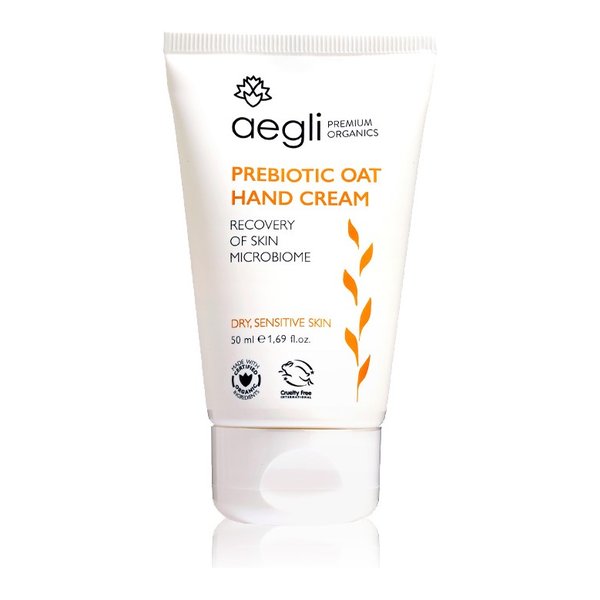
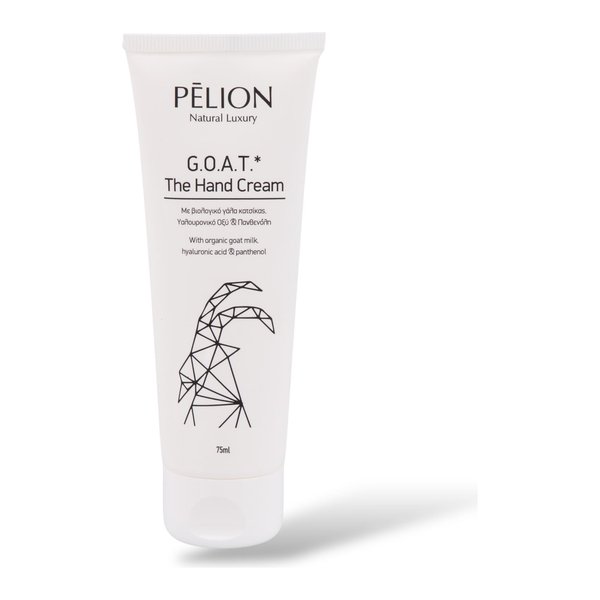
The Aegli Prebiotic hand cream is a good example of a clear label: the full list is on the shop page, organic ingredients carry an asterisk, there is a statement about the COSMOS standard, and after "Parfum" it lists citronellol, geraniol, limonene and linalool separately. PELION's G.O.A.T. Hand Cream shows something else: its first ingredient is goat milk, not water, which matches what its description says, and it also contains fragrance.
"Dermatologically tested", "hypoallergenic", "free from": what are the rules?
In the EU, every claim on a cosmetic must meet six common criteria in Commission Regulation (EU) 655/2013: legal compliance, truthfulness, evidential support, honesty, fairness and informed decision-making. A technical document agreed by the Commission and the Member States explains how to apply them. It is not law, but authorities use it as a guide, and its parts on "free from" and "hypoallergenic" apply from 1 July 2019.
"Dermatologically tested". This means the product was tested on people under a dermatologist's supervision. A survey where users simply give their opinion is not enough. The EU Court of Justice has found that consumers expect the results to have been favourable. It does not tell you how many people took part or for how long.
"Hypoallergenic". This is only allowed when the product has been designed to keep its allergy potential to a minimum and contains no known allergens. The same document stresses that "hypoallergenic" does not guarantee you will not react.
"Free from...". Some examples from the document:
- A product should not claim to be "free from" a substance that is banned in cosmetics anyway.
- "Preservative-free" should not be used if another ingredient does the same job, such as alcohol.
- "Perfume-free" should not be used if any ingredient gives the product a scent, even if it has another role too.
- "Paraben-free" is seen as denigrating substances that are permitted and safe, and should not be accepted.
- "Free from allergens" is not allowed, because no one can guarantee it.
You will still see some of these phrases on shelves. The ingredients list remains the most reliable source.
Quick check at the shelf
- What is the first ingredient? Is it what you expected?
- Is there "parfum" or an essential oil, and which allergens are listed after it?
- Is there a certification mark (COSMOS, NATRUE), or only the word "natural"?
- What number is on the open jar (PAO)? Have you noted when you opened it?
- If it says "hypoallergenic", have you tried it on a small patch first?
When to ask a pharmacist or dermatologist
If a product has caused redness, itching, swelling or a rash, stop using it and keep the packaging: the ingredients list and batch number will help your doctor. If you react to cosmetics often, a dermatologist can do a patch test to find which substance you are allergic to, so you know which name to look for on labels.
FAQ
The full list is often only on the box. What if I threw it away?
The Regulation allows the list to appear on the outer packaging alone. Keep the box while you use the product, or take a photo of the list.
Is a product safe after its date or PAO period?
The Regulation defines the date as the time during which the product does its job and stays safe. After that there is no guarantee. If the smell, colour or texture has changed, throw it out.
Does "chemical-free" mean anything?
No. Every ingredient, water included, is a chemical substance. It is a marketing phrase with no practical meaning.
Sources: Regulation (EC) 1223/2009 on cosmetic products (Articles 19 and 20, Annex VII), Commission Regulation (EU) 655/2013 (common criteria for claims), Technical document on cosmetic claims (version of 3 July 2017, Annexes I to IV), COSMOS-standard AISBL, COSMOS certification, NATRUE.