If your skin stings, reddens or itches with most products, the best moisturiser is usually the simplest one: fragrance-free, with a few well-known moisturising ingredients such as glycerin, hyaluronic acid, ceramides and shea butter. The ingredients list (INCI) on the pack tells you more than the marketing on the front. And before putting anything new on your face, try it on a small patch of skin for a few days.
What does "sensitive skin" mean?
It is not a medical diagnosis. According to DermNet, it is an everyday term for skin that tolerates cosmetics and personal care products less well. In surveys, around half of women and 4 in 10 men say they have sensitive skin.
It usually shows up as stinging, burning or itching, sometimes with redness or dryness. It often affects only the face, and the eyelids in particular. A product that does not bother your hands may still bother your face.
"Sensitive skin" can also hide things that need a doctor, such as rosacea, eczema or an allergy to a specific ingredient. If you have a diagnosed condition, or symptoms that do not settle, a dermatologist is the right person to see. This article is about everyday skin care, not treatment.
Why is fragrance the first thing to check?
Because fragrance ingredients are among the most common causes of allergic reactions from skin contact. According to DermNet, fragrance allergy is second only to nickel and affects around 1% of adults. In 2011 the EU Scientific Committee on Consumer Safety (SCCS) listed 82 fragrance substances established as contact allergens, including 28 natural extracts.
Two things worth knowing:
- "Natural" does not mean "gentle". Essential oils and plant extracts also contain fragrance substances that can cause allergy.
- "Fragrance-free" and "unscented" are not the same. The American Academy of Dermatology (AAD) explains that an "unscented" product can contain chemicals that hide the smell of other ingredients, and these can irritate sensitive skin. Look for "fragrance-free".
How do I read the ingredients list (INCI)?
The list is required on every cosmetic in the EU and uses international names. What to look for:
1. "Parfum" or "Fragrance". If you see it, the product contains fragrance, natural or synthetic.
2. Names of fragrance allergens. Under the Cosmetics Regulation, certain fragrance substances must be listed individually when they exceed 0.001% in leave-on products (such as a cream) or 0.01% in rinse-off products. Common examples are linalool, limonene, citral, geraniol, citronellol, eugenol and coumarin. If a patch test has shown you are allergic to one of them, this is where you will find it.
Regulation (EU) 2023/1545 extends the list of fragrance substances that must be labelled. New products must comply from 31 July 2026, and all products on the shelves by 31 July 2028. So over the next few years you will see more names on labels, which helps people with allergies.
3. Essential oils. These are usually listed by the plant's Latin name plus "oil", for example Lavandula Angustifolia Oil. If your skin reacts easily, prefer products without them.
4. Alcohol. The AAD advises people with dry skin to avoid products containing alcohol (alcohol denat.) and fragrance.
Which ingredients are useful?
For dry skin, the AAD suggests creams that contain one or more of these ingredients:
- Glycerin and hyaluronic acid (or sodium hyaluronate): they draw in and hold water at the skin's surface.
- Shea butter, jojoba oil and dimethicone: they soften the skin and reduce water loss.
- Petrolatum and mineral oil: they form a thin layer that holds moisture in, though some people find them heavy on the face.
You will often also see ceramides on the list (ceramide NP, ceramide NG and others). These are lipids naturally found in the outer layer of the skin, and many creams for sensitive skin contain them.
The AAD also notes that creams give more moisture than lotions. For very dry skin, a richer cream is usually the better choice.
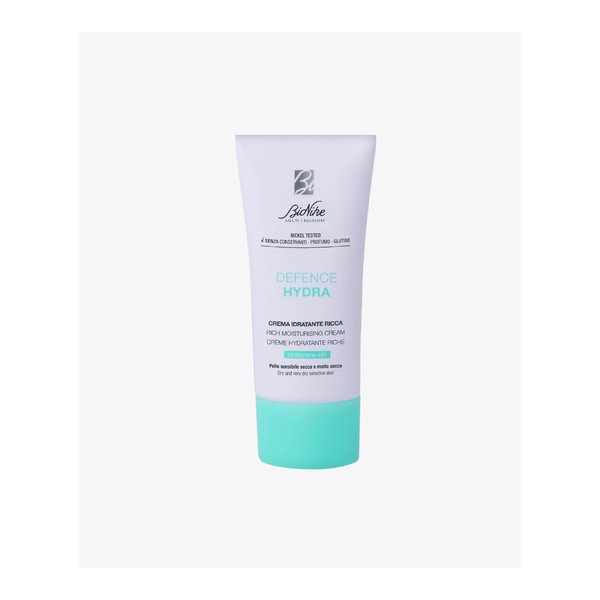
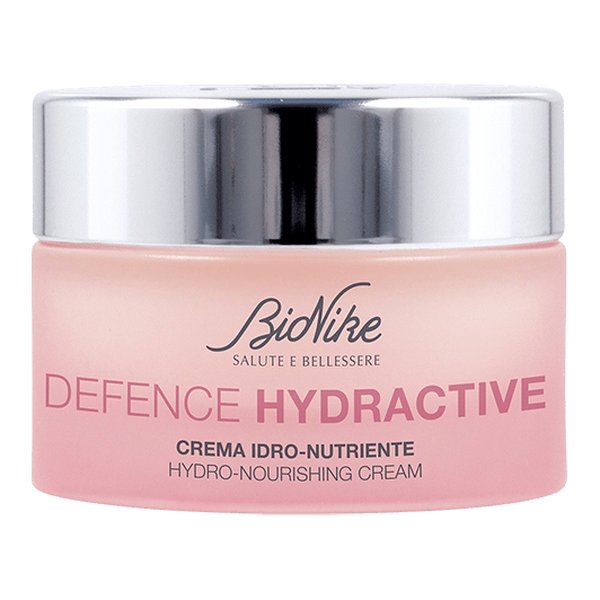
Defence Hydra Light, for example, combines hyaluronic acid, ceramide NG, shea butter and jojoba oil, is fragrance-free and preservative-free, and is nickel tested. The Hydro-Nourishing Cream from the same brand is richer, with hyaluronic acid in five molecular weights, carnosine and shea butter, and is also fragrance-free and preservative-free.
How do I test a new product?
The AAD suggests a simple home test before putting something new on your face:
- Apply a little product to a coin-sized spot where it will not be rubbed off, such as the inside of your forearm or the bend of your elbow.
- Repeat twice a day for 7 to 10 days, using the amount you would normally use.
- If you see no redness, itching or swelling, go ahead and use it.
- If it reacts, wash it off gently and do not use it again.
This is not the same as the patch test a dermatologist carries out to find out which substance you are allergic to. If you react to products often and do not know why, it is worth asking for one.
Why are fewer products better?
Every new product is another possible source of irritation. DermNet notes that people with dry skin often use several products at once to try to improve it, and can end up with irritation from them. For sensitive skin, DermNet suggests a gentle soap-free cleanser, a non-irritating moisturiser and sun protection.
A simple routine:
- Morning: gentle cleanse or just water, moisturiser, sunscreen.
- Evening: gentle cleanse, moisturiser.
- One new product at a time, so that if something bothers you, you know what it was.
Quick check at the shelf
- Does it say "fragrance-free", not just "unscented"?
- Is there no "parfum" and no essential oil on the list?
- Does it contain glycerin, hyaluronic acid, ceramides or shea butter?
- Is it a cream rather than a thin lotion, if your skin is very dry?
- Have you tried it on a small patch first?
When to see a dermatologist
If you have eczema, rosacea or another diagnosed condition, if redness or itching does not settle when you stop a product, if you get blisters, swelling or a rash, or if you react to almost every product. A dermatologist can find the cause and tell you what to avoid. A moisturiser is a cosmetic and does not replace treatment.
FAQ
Are "hypoallergenic" products safe for me?
The word "hypoallergenic" does not guarantee that you will not react. It is more useful to read the ingredients list, avoid fragrance and anything you know bothers you, and do the 7 to 10 day test.
Can I use the same cream morning and evening?
Yes. Many people with sensitive skin use one light cream in the morning under sunscreen, and the same one, or a richer one, in the evening. Fewer products means fewer chances of irritation.
What does "nickel tested" mean?
That the manufacturer has checked the product for traces of nickel. Nickel is the most common cause of contact allergy, so the label matters mainly to people who know they are allergic to it.
Sources: Regulation (EC) 1223/2009 on cosmetic products (Article 19 and Annex III), Commission Regulation (EU) 2023/1545 (labelling of fragrance allergens), DermNet, Sensitive skin, DermNet, Fragrance allergy, American Academy of Dermatology, Dermatologists' top tips for relieving dry skin, American Academy of Dermatology, How to test skin care products.