Mineral filters (zinc oxide and titanium dioxide) and "chemical", or organic, filters do the same job: they cut the amount of ultraviolet light that reaches your skin. In the EU every filter, mineral or organic, is allowed only if it appears on the official list in the Cosmetics Regulation, with set limits. Choosing between them is mostly about texture, appearance and how your own skin reacts, and the amount you apply matters more than the type of filter.
What are mineral and chemical filters?
- Mineral (inorganic) filters: zinc oxide and titanium dioxide. They are fine powders that stay on the surface of the skin.
- Organic ("chemical") filters: molecules such as octocrylene, avobenzone (butyl methoxydibenzoylmethane) and many newer ones. Usually several are combined so that together they cover the whole UV range.
You will often hear that mineral filters "reflect" the sun like a mirror while chemical ones "absorb" it. In reality, a 2016 study (Cole and colleagues) measured that zinc oxide and titanium dioxide reflect only about 4–5% of UV light. Most of their protection also comes from absorption. So the "physical versus chemical" split is more about naming than about how they work.
What does the SPF number mean?
SPF measures protection against UVB, the part of sunlight mainly responsible for sunburn. European Commission Recommendation 2006/647/EC groups sunscreens into categories that should appear on the label:
- Low protection: SPF 6 and 10
- Medium: SPF 15, 20 and 25
- High: SPF 30 and 50
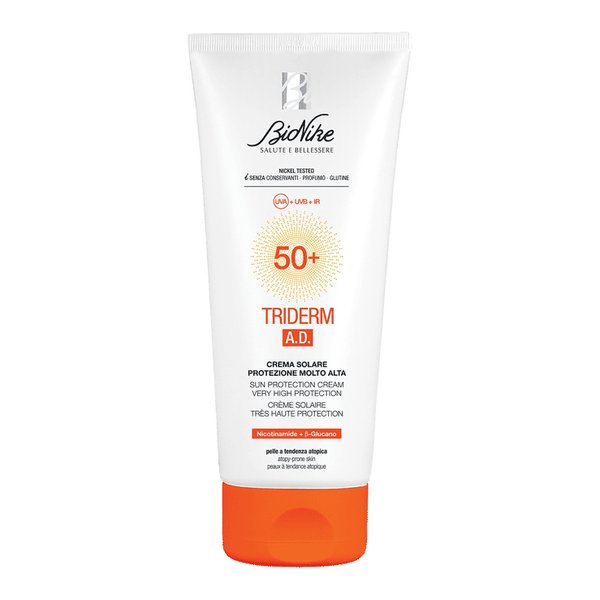
- Very high: 50+
The same Recommendation asks that every sunscreen also protect against UVA, with a UVA protection factor of at least one third of the SPF. Products that meet this usually carry the "UVA" logo in a circle. Look for it, whichever type of filter you choose.
Which type is safer?
The EU does not rank one type as "safer" than the other. Each filter is assessed individually by the Scientific Committee on Consumer Safety (SCCS) and is allowed only up to a maximum concentration, under Regulation (EC) 1223/2009 on cosmetic products. Two examples show that the list is kept under review:
- In 2022, Regulation (EU) 2022/1176 lowered the permitted limits for two organic filters, benzophenone-3 and octocrylene, after a new SCCS assessment. Products on the market have had to meet the new limits since 2023.
- Mineral filters in nano form are allowed in creams and lotions, but not in products that could be inhaled, such as sprays. In the ingredients list they are marked "(nano)".
If your skin is sensitive or reacts to a particular organic filter, a mineral sunscreen is a sensible alternative. If you have a specific allergy, your dermatologist can tell you what to avoid.
Why do some sunscreens leave a white cast?
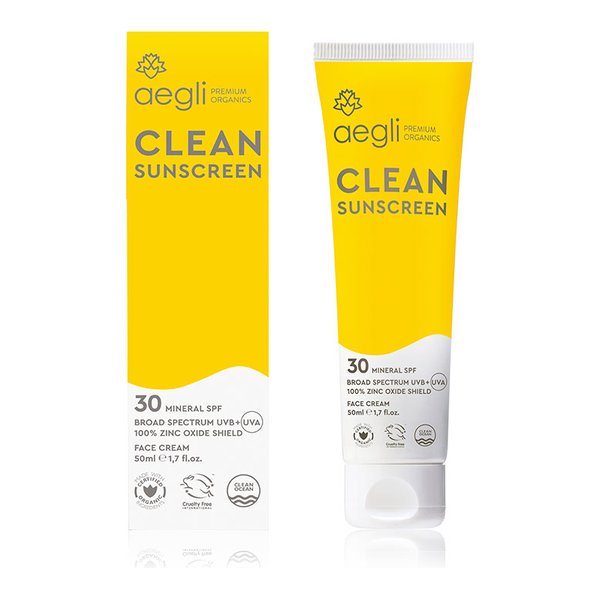
Because zinc oxide and titanium dioxide powders are white. The larger the particles, the more visible the cast. That is why many mineral sunscreens need a little more rubbing in, or come in tinted versions. Organic filters are usually transparent and lighter in texture.
The practical advice: the best sunscreen is the one you like enough to apply generously every day.
How much should I apply?
This is where the biggest problem lies, and it applies to every sunscreen. SPF is measured in the laboratory using 2 mg per square centimetre of skin. According to the Commission Recommendation, for an average adult that means about 36 grams for the whole body, roughly six teaspoons of lotion. Most of us use far less. The same Recommendation notes that if you apply half that amount, protection can fall by as much as two thirds.
How often should I reapply, and what does "water resistant" mean?
- Reapply often, especially after sweating, swimming or towelling dry. The EU does not allow claims such as "all-day protection with no need to reapply" or "100% protection" ("sunblock").
- "Water resistant" means, under the Cosmetics Europe recommendation, that a product keeps at least 50% of its protection after two 20-minute immersions in a standard test. "Very water resistant" means the same after four 20-minute immersions. Neither means you can skip reapplying after a swim.
And, as the Commission Recommendation asks labels to say: do not stay too long in the sun, even when using sunscreen, and keep babies and young children out of direct sunlight.
FAQ
Does a mineral SPF 30 protect less than a chemical SPF 30?
No, as long as both have been tested by the same methods. The SPF number and the UVA logo tell you the protection, not the type of filter. In practice the difference comes from how much you apply and how often you reapply.
What are nanoparticles in mineral sunscreens?
They are very small particles of zinc oxide or titanium dioxide that leave less of a white cast. The EU allows them in creams and lotions but not in sprays that could be inhaled, and they must be marked "(nano)" in the ingredients list.
Do I need sunscreen in winter in Cyprus?
UV is weaker in winter, but it does not disappear. The World Health Organization recommends sun protection whenever the UV index reaches 3 or above. Check the day's UV index in the weather forecast to decide.
Sources: Commission Recommendation 2006/647/EC on the efficacy of sunscreen products, Regulation (EC) 1223/2009 on cosmetic products (Annex VI, UV filters), Commission Regulation (EU) 2022/1176 (benzophenone-3 and octocrylene), Cosmetics Europe, Recommendation No. 16 on water resistance labelling (revised 2023, ISO 16217:2020 and ISO 18861:2020), Cole C, Shyr T, Ou-Yang H, Metal oxide sunscreens protect skin by absorption, not by reflection or scattering, Photodermatology, Photoimmunology & Photomedicine 2016, 32(1):5–10, World Health Organization, Radiation: The ultraviolet (UV) index.